


 English
 Español
 русский
 عربى
 中文简体

Industry News
Machine Knitting Sweater Guide: Gauges, Systems, and Production Choices
Date:Nov 05, 2026
Content
- 1 What Machine Knitting a Sweater Really Involves
- 2 Flatbed, Circular, or Fully Fashioned? Start with the Product
- 3 Reading the Spec Sheet: Gauge, Width, and Systems
- 4 Matching the Machine to Your Sweater Line
- 5 From Sample to Production: A Workable Workflow
- 6 Quality Checks That Matter on a Sweater Machine
- 7 A Note on Support and the Real Cost of Ownership
Machine knitting a sweater can mean very different things depending on where you stand. For a hobby knitter, it may be a circular machine that turns out a simple tube for a pullover. For a garment factory, it means a computerized flatbed, a written program, a yarn plan, and a panel sequence that has to meet a size chart order after order. The principle is the same in both cases: needles form loops, and the machine decides how consistently those loops become fabric.
We build computerized flatbed knitting machines in Changshu, China, and most of the sweater questions we hear are really fit questions. Does the machine fit the yarn? Does it fit the style? Does it fit the order size and the skills of the people running it? This guide walks through those decisions in plain language, without turning the spec sheet into a mystery.
What Machine Knitting a Sweater Really Involves
A sweater is rarely one piece of fabric. It is a front panel, a back panel, two sleeves, a collar, and often cuffs and a hem. On a flatbed machine, those pieces are knitted flat and then linked, sewn, or finished. Some machines are set up for fully fashioned shaping, where stitches are transferred and panels are widened or narrowed to create the garment shape. Others are described as ready-to-wear or whole-garment systems because they reduce the amount of cut-and-sew work after knitting.
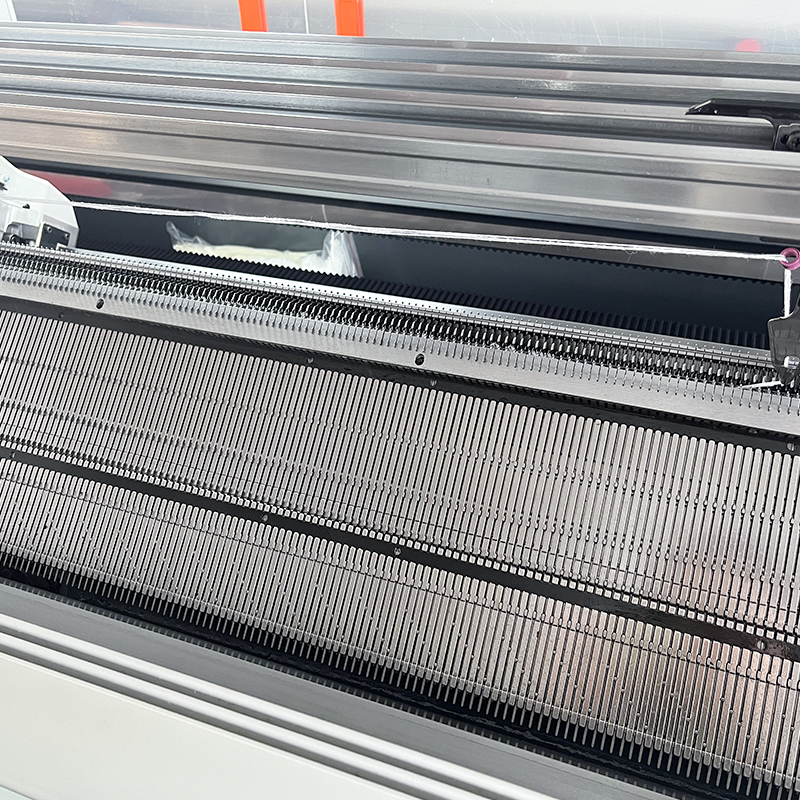
During knitting, a carriage travels across the needle bed while yarn feeders deliver yarn to selected needles. The program controls stitch selection, carriage speed, yarn changes, and take-down. Shaping can come from widening, narrowing, holding stitches, or transferring them. The machine does not make a sweater by itself. Yarn quality, tension, needle condition, room humidity, and finishing all influence the final hand feel and measurement.
That is why two factories can run the same sweater program on similar machines and still get different results. The machine is the platform, but the process around it decides whether the sweater looks the same on Monday and on Friday.
Flatbed, Circular, or Fully Fashioned? Start with the Product
The first decision is not the brand or the number of systems. It is the kind of sweater you intend to make. Simple tubular pieces, shaped panels, heavy gauge knits, and fine-gauge fashion sweaters all pull the machine choice in different directions. The table below gives a practical comparison of the main machine classes used for sweater knitting.
| Machine class | Typical setup | Best fit | Limits to plan for |
|---|---|---|---|
| Manual flatbed or hobby circular machine | Hand-manipulated needles or simple electronic control | Sampling, simple tubes, craft production, and learning | Limited shaping and low repeatability at commercial volume |
| Economic computerized flatbed | Single or double system, 52-inch class, 12G | Basic panels, trims, short runs, and first production lines | Fewer systems and a narrower range of complex structures |
| Full-function computerized flatbed | Three or four systems, 52 to 72 inches, specialty needle options | Multi-gauge sweater programs, complex structures, and higher output | Higher investment and a greater need for skilled programming |
| Ready-to-wear or fully fashioned system | Three-system, 72-inch class, integrated shaping | Reduced cut-and-sew work and whole-garment style development | Programming and yarn control become especially critical |
For most commercial sweater production, the computerized flatbed is the workhorse. Circular machines are excellent for simple tubes and brisk sampling, but they are not the natural choice when you need shaped armholes, set-in sleeves, or a consistent rib trim. A flatbed gives you needle-by-needle control, and that control is what turns a good sweater design into a repeatable product.
Reading the Spec Sheet: Gauge, Width, and Systems
Gauge and Yarn
Gauge is usually expressed as needles per inch. A 12G machine is common for fine-gauge sweater panels, while 3G and 2.5G machines appear in chunkier knits and heavier fabrics. The gauge has to match the yarn. A yarn that is too thick for the gauge will strain the needles and produce an uneven needle line. A yarn that is too thin will give a loose, shapeless fabric unless the program and tension are adjusted carefully.
Width and Panel Fit
Width matters more than many buyers expect. A 52-inch machine can handle most standard body panels and sleeves, but a 72-inch bed gives more room for larger panels, multiple panels side by side, or wider garment shapes. If you plan to knit long coats, oversized sweaters, or wide blanket-style pieces, the extra width is not a luxury. It is the difference between a workable marker and a constant compromise.
System Count and Output
A system is a knitting position along the carriage. A double-system machine can knit two courses in one traverse, while three- and four-system machines add more knitting positions and more complex sequence options. More systems can raise output, but the gain is not automatic. Yarn delivery, take-down, and the program itself all have to keep up. The right question is not simply "how many systems?" but "how many systems does my sweater style actually use efficiently?"
Needle and Carriage Features
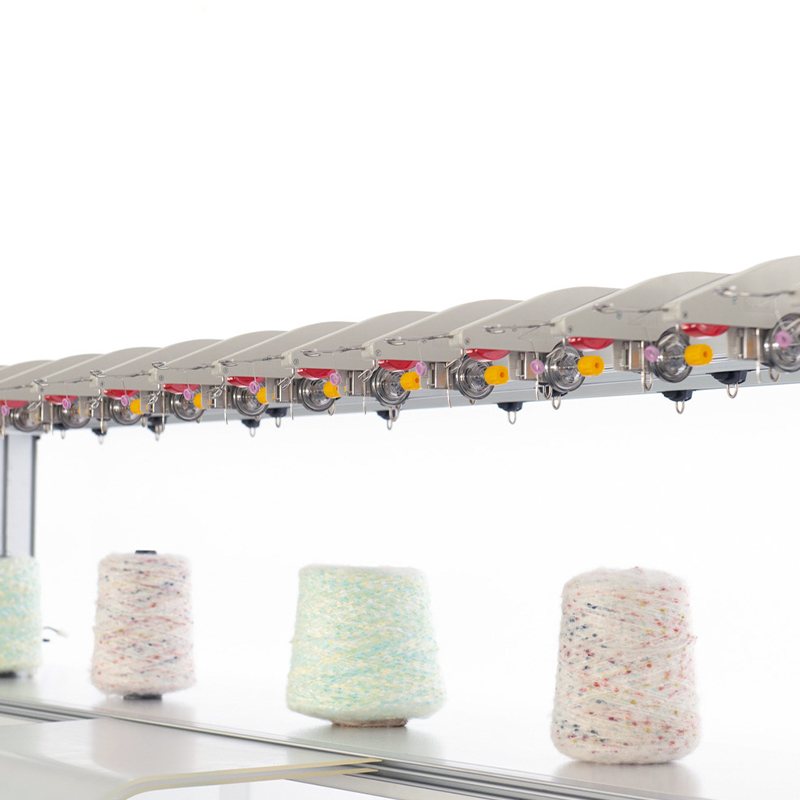
Small mechanical choices show up in the final sweater. Compound needle bottom-up knitting can improve stitch formation at the start of a panel. No-waste-yarn bottom-up systems reduce the yarn sacrificed at the beginning of knitting. Intelligent yarn feeders help hold tension steady when the carriage speed changes. Dual-carriage and straight-collar configurations matter when you are producing collars or trims alongside sweater panels. These are not marketing extras. They are practical answers to specific production problems.
Matching the Machine to Your Sweater Line
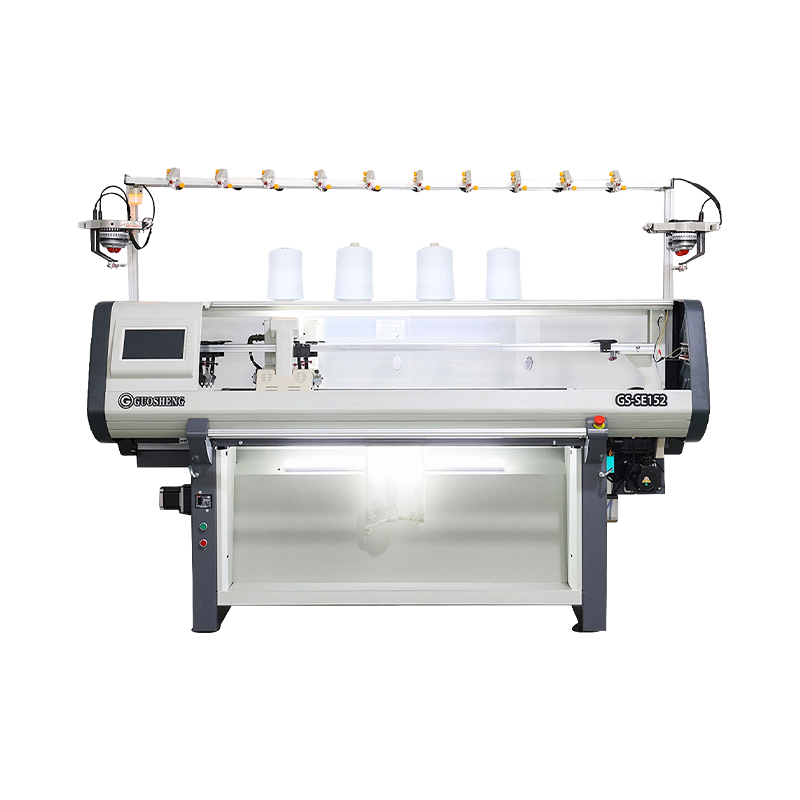
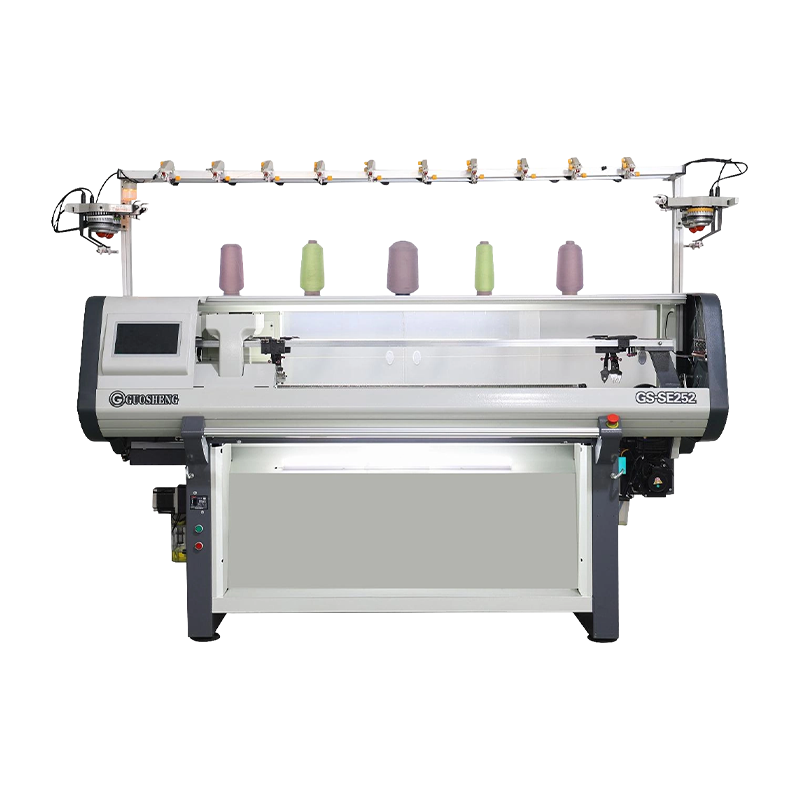
For sampling, trim work, and short production runs, an economic double-system machine is often the sensible entry point. The 52-inch, 12G economic double-system sweater machine gives you a clear cost base for basic panels and simple structures without overbuilding the first line. It is a machine that lets a team learn the workflow before committing to a larger cell.
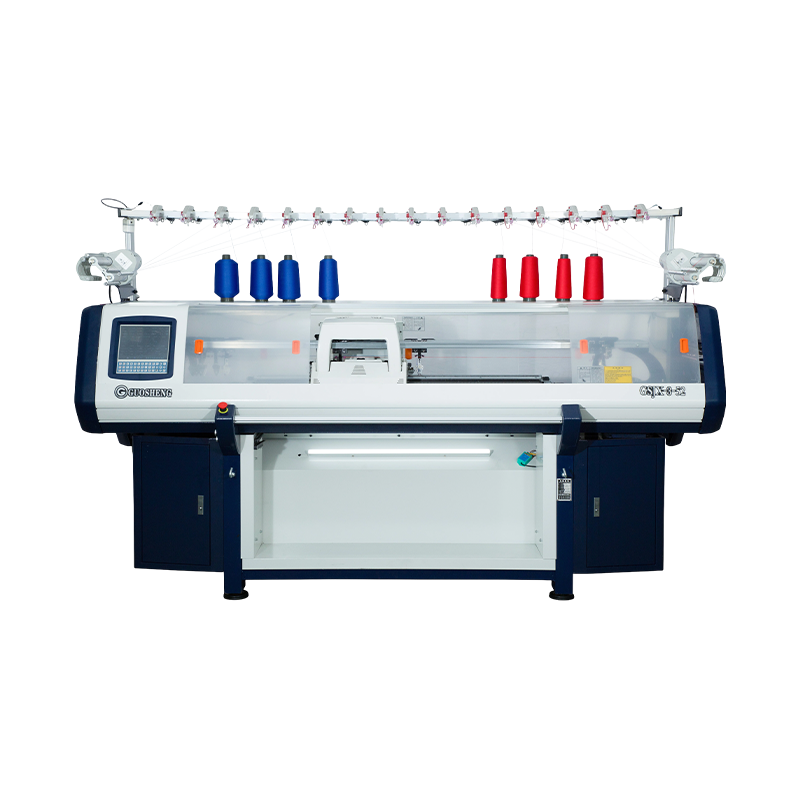
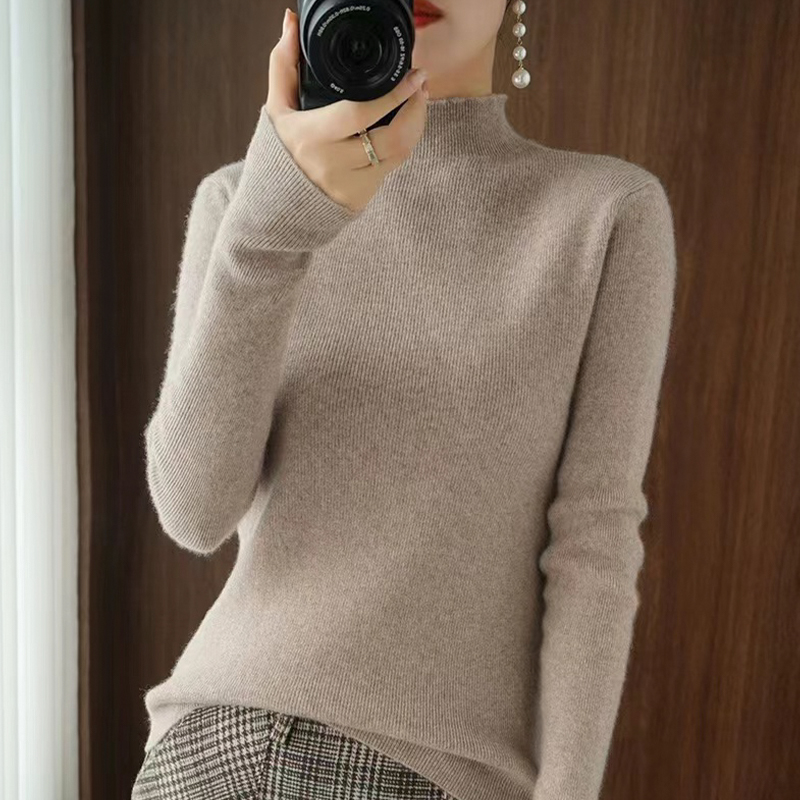 GS-SE252 12G 52-Inch Economic Double-System Sweater MachineA cost-conscious 52-inch, 12G double-system flat knitting machine for basic panels and simple structures, suited to sampling, trim work, and short production runs.View Product →
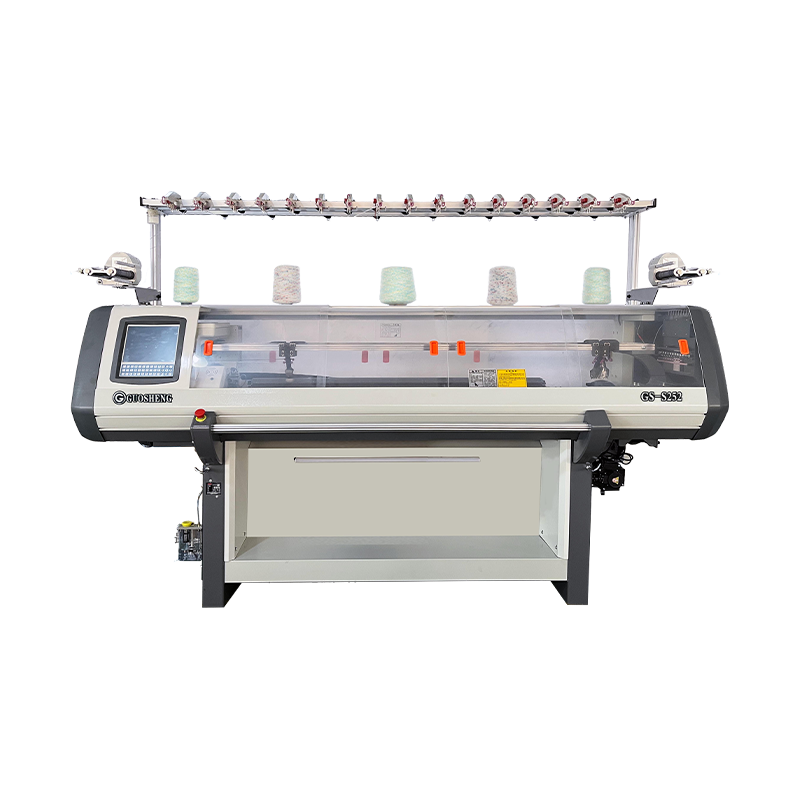
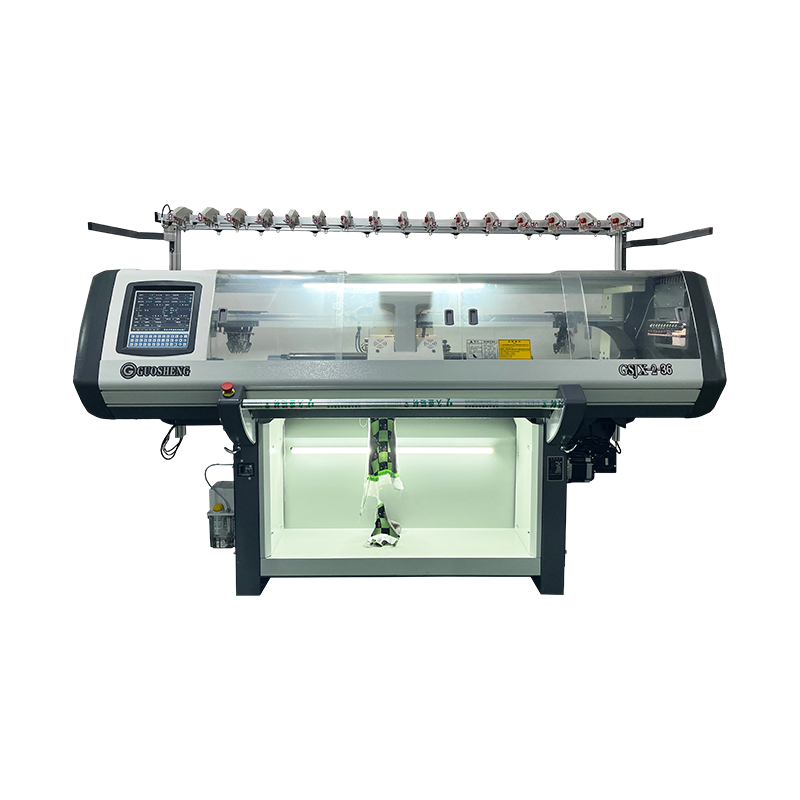
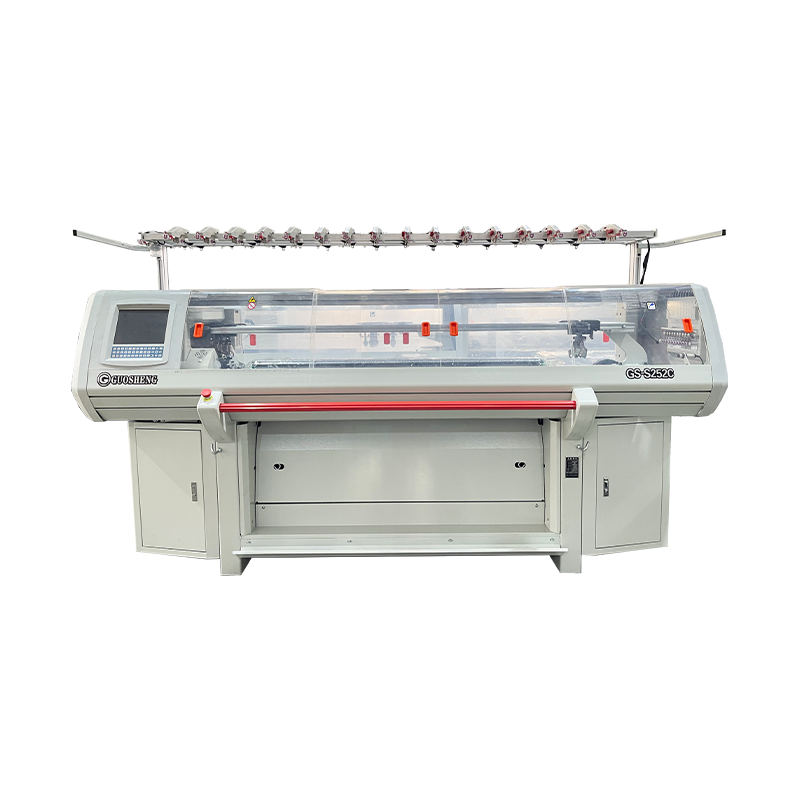
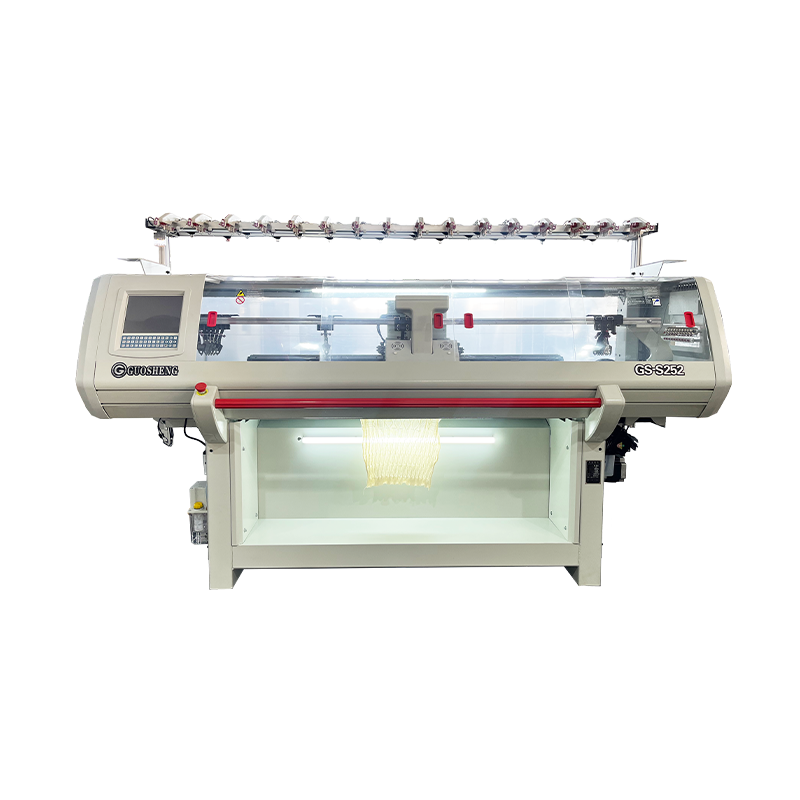
When orders grow and the sweater program becomes more varied, a full-function double-system machine is a versatile next step. The 52-inch double-system model in our full-function S series is the kind of machine that can handle everyday sweater panels, rib trims, and program changes without forcing a complete change of production logic. It is a good middle ground for factories that need flexibility but do not yet need the widest bed or the highest system count.
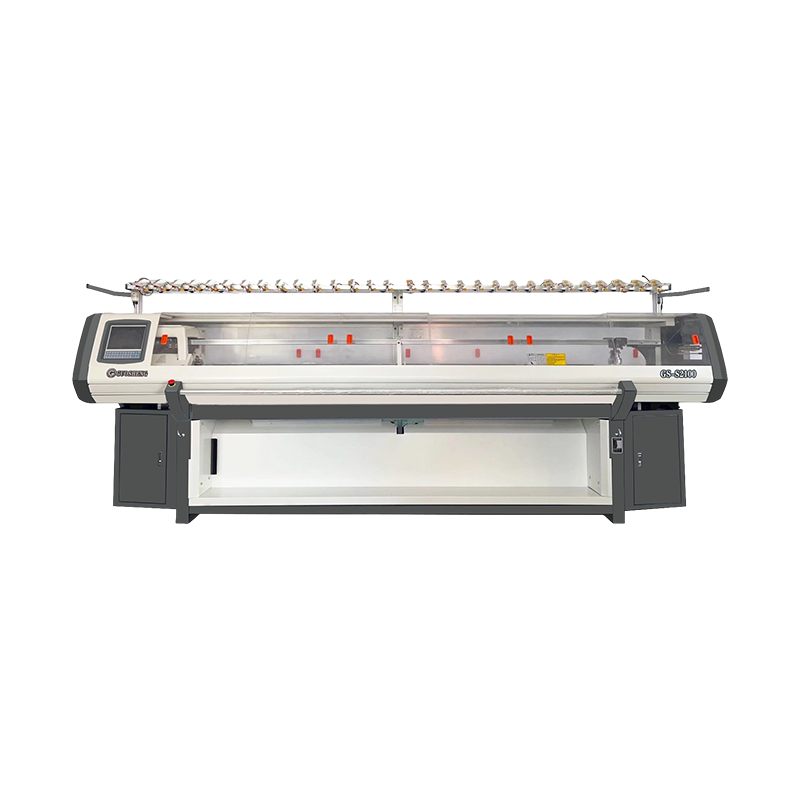
 GS-S252 52-Inch Full-Function Double-System Sweater Knitting MachineA 52-inch full-function double-system flat knitting machine for everyday sweater panels, rib trims, and varied programs, offering a flexible middle ground before wider three-system production.View Product →
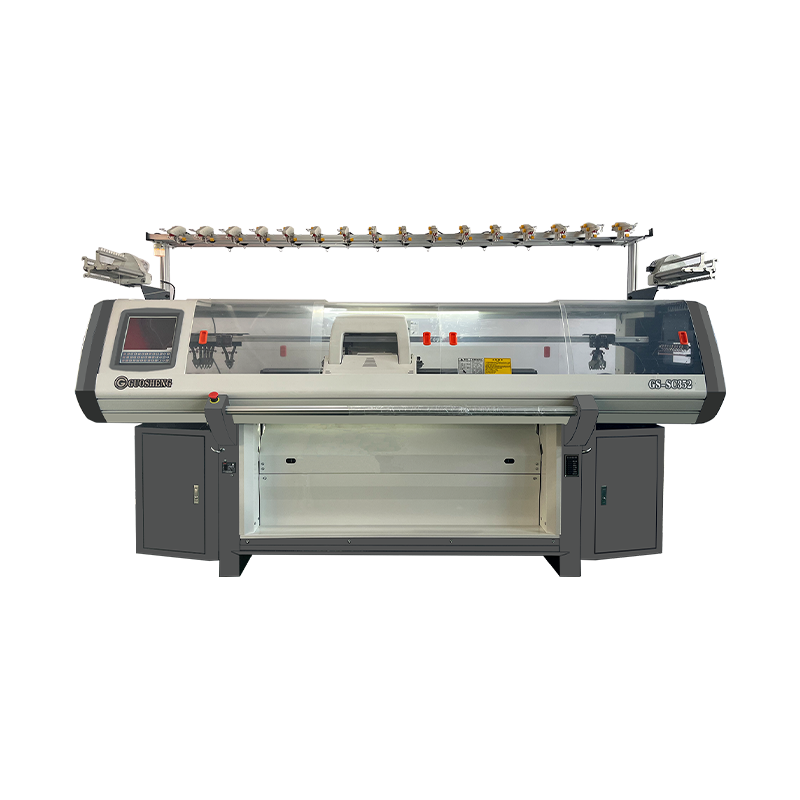
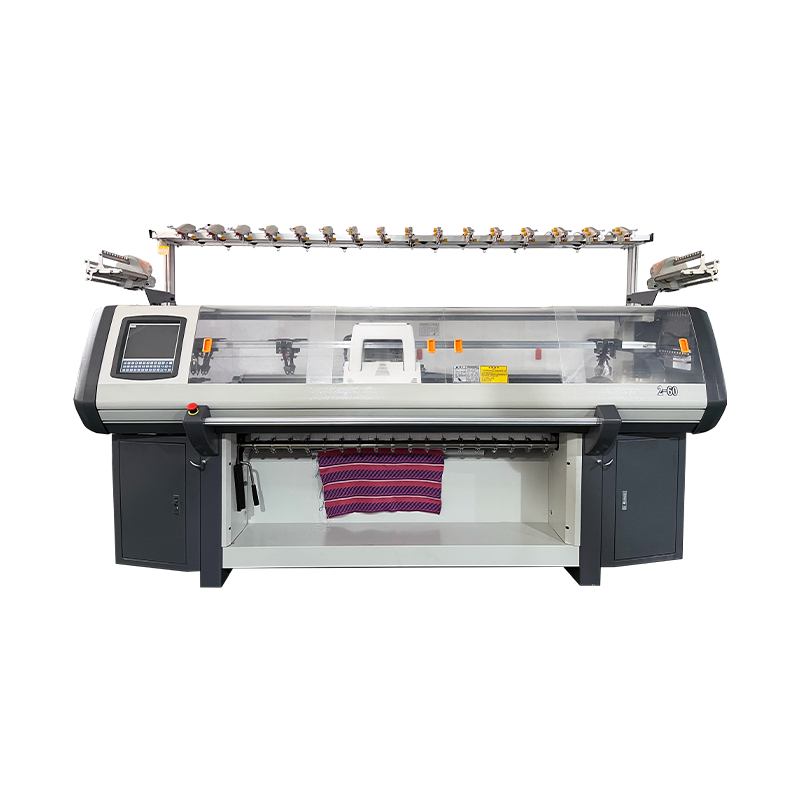
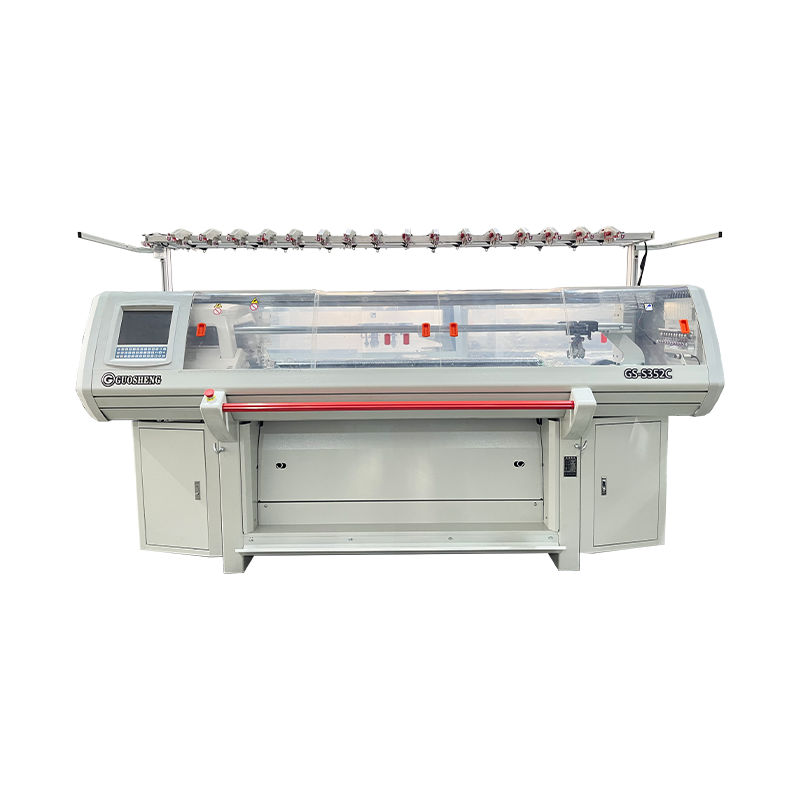
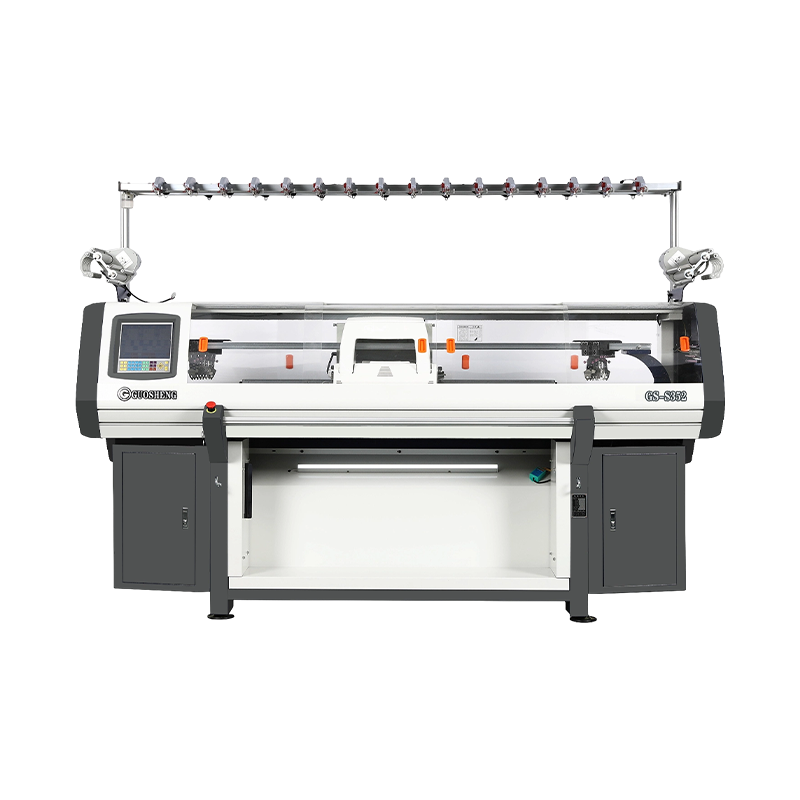
For larger panels, wider garment shapes, and higher-volume runs, the 72-inch three-system sweater machine gives the team more room and more knitting positions. It suits production plans where panel width and output both matter, and it pairs naturally with a program library that includes shaped bodies, sleeves, and multi-gauge development work.
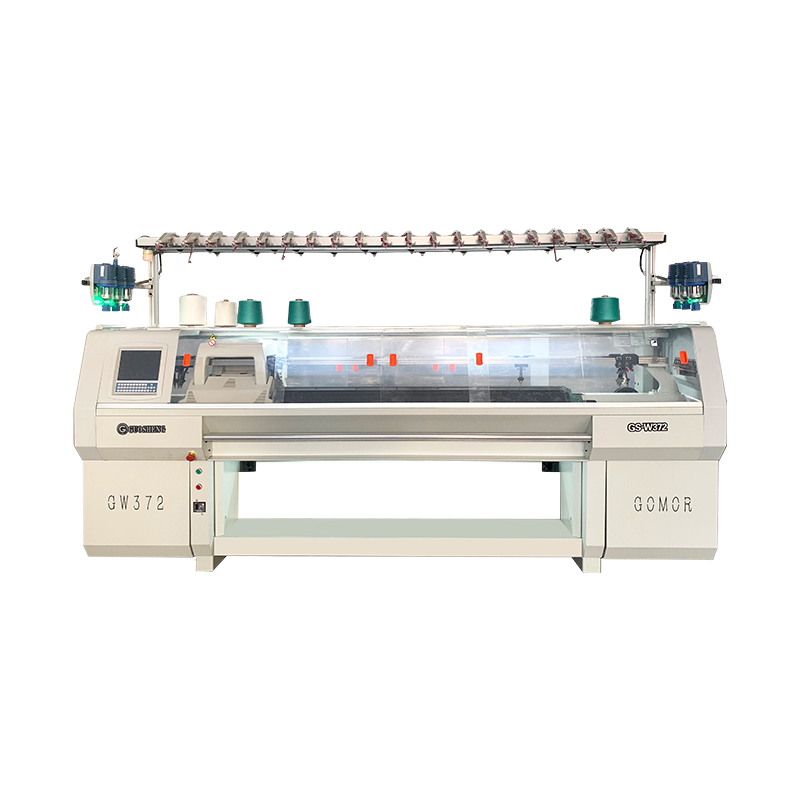
 GS-S372 72-Inch Three-System Sweater Knitting MachineA wide-bed three-system flat knitting machine for larger panels, wider garment shapes, and higher-volume runs, with more knitting positions than double-system models.View Product →
The practical rule is simple: choose the smallest machine that comfortably covers your widest common panel and your most complex frequent structure. Buying more width than the product needs adds cost without adding value. Buying too little width turns every new style into a workaround.
From Sample to Production: A Workable Workflow
A sweater machine performs best when the process around it is disciplined. The sequence below is the one we recommend to new sweater producers, and it works just as well for established factories adding a new line.
- Define the finished size chart first. Include chest, body length, sleeve length, cuff opening, and collar dimensions after relaxation, not just off the machine.
- Select yarn and gauge together. Confirm that the yarn count, twist, and fiber behave well at the intended stitch density.
- Knit a swatch and wash or relax it the way the final garment will be handled. Record stitch density and course density before writing the full program.
- Program the panels with clear shaping points. Mark widening, narrowing, holding, and transfer positions so the machine operator can verify them easily.
- Run a pilot panel set and link or finish one complete sweater. Check drape, measurement, and trim quality before moving to bulk.
- Lock the approved program, yarn lot, tension settings, and take-down values. Reproducibility starts with written settings, not memory.
Quality Checks That Matter on a Sweater Machine
Most knitting problems show up long before the sweater reaches finishing. A short daily check saves hours of rework later.
- Watch course-by-course tension, especially at the start and end of a panel.
- Inspect for needle lines, holes, dropped stitches, and uneven loops.
- Measure panels after relaxation, not immediately off the bed.
- Check hand feel and shrinkage after the wash or finish process used for the final garment.
- Review linking, trimming, and collar attachment, because a good panel can still be lost in finishing.
When a problem appears, trace it back through yarn, tension, take-down, needle condition, and program settings in that order. The machine is rarely the only variable, and it is often not the first one to check.
A Note on Support and the Real Cost of Ownership
A sweater machine is a long-term tool. The purchase price is only one part of the cost. Training, spare needles, service response, software familiarity, and the ability to reproduce an approved program matter just as much over five years of production. A machine that is slightly cheaper but hard to support can become the most expensive machine in the factory.
We have written a closer look at what makes a computerized sweater knitting machine worth the investment, including the questions that tend to matter after installation. If you are planning a sweater line or replacing an aging cell, you are welcome to talk through your sweater program with us. We would rather help you define the right width, gauge, and system count than sell you a machine that looks impressive on paper and awkward on the factory floor.
Machine knitting a sweater is part craft and part engineering. The craft is in the yarn, the hand feel, and the shape. The engineering is in the gauge, the width, the systems, and the discipline of the program. When those two sides are matched, a computerized flatbed becomes more than a piece of equipment. It becomes a reliable way to turn a sweater design into a product that fits, repeats, and sells.

Ready to Begin?
Product Categories
- Sweater Knitting Machine (Economic SE)
- Sweater Knitting Machine (Full Function S)
- Collar Knitting Machine (Economic CE)(Fabric)
- Collar Knitting Machine (Full-Function C)
- Blanket Knitting Machine(Fabric)
- Shoe Upper Knitting Machine
- Ready To Wear Sweater Knitting Machine
- Ready To Wear Glove Knitting Machine
- Ready To Wear Hat Knitting Machine
- Knee Pad Knitting Machine
- Metal Mesh Knitting Machine
Contact Information
-
 Email: gs@guoshengchina.cn
-
 Phone: +86-0512-52690511
-
 Address: No. 18, Hupu Pujiang Road, Bixi New District, Changshu City, Jiangsu Province, China
QR Code
